


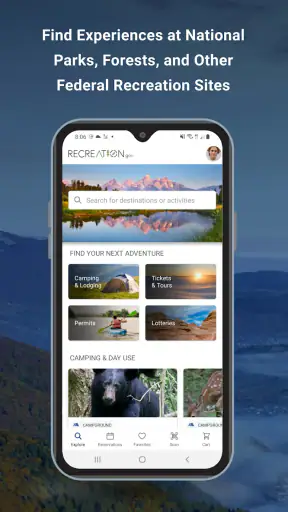
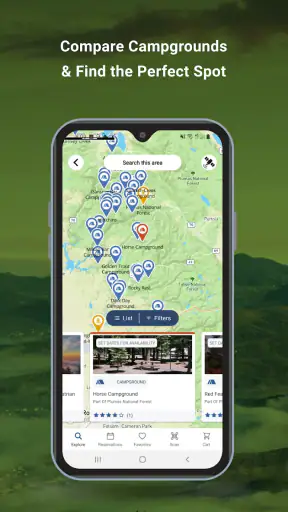
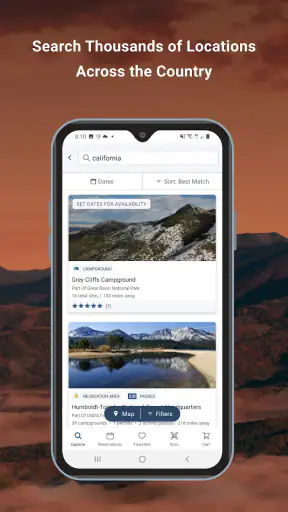
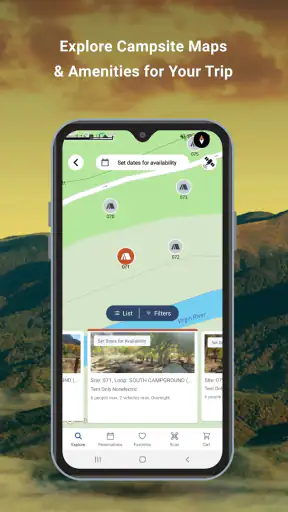
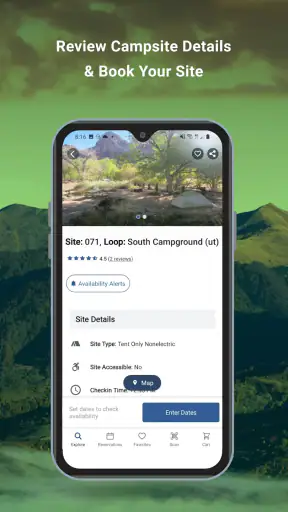
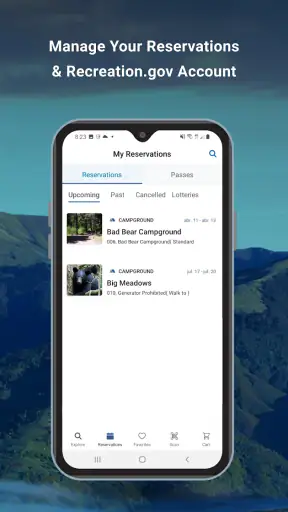
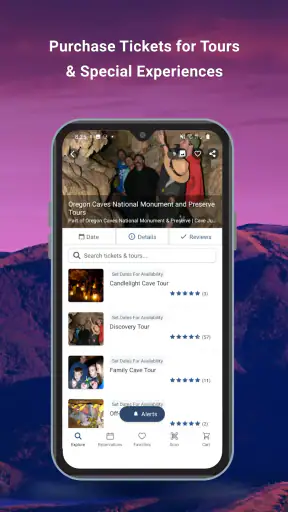
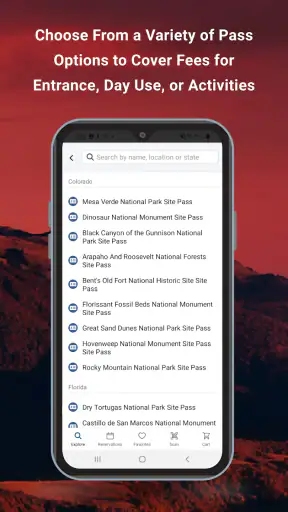
Recreation.gov is the kind of travel app that becomes useful before a trip is fully planned. I used it as a practical starting point for finding outdoor recreation opportunities, checking available plans, and keeping reservations connected to one place. Its focus is clear: camping, RV trips, and exploring public outdoor destinations rather than booking every part of a holiday. That narrow purpose is also its biggest strength.
As a free Travel & Local app, it feels most valuable when a trip depends on a campsite, a timed entry, or another reservation managed through Recreation.gov. The app is made by Booz Allen Hamilton, Inc., and its store summary, “Camp, RV, and Explore Outdoors,” accurately describes the experience without explaining why it can matter so much during a busy travel season. I found the app less like a general travel guide and more like a working reservation tool for people who already know they want to spend time outdoors.
From an appealing first week to a dependable outdoor habit
The first-week appeal is practical, not flashy
During the first few sessions, the main attraction is how quickly the app can turn a vague idea into a concrete outdoor plan. Instead of searching across unrelated websites, I could begin with the type of recreation I wanted and then narrow my attention to relevant places and dates. That reduces the usual early-trip confusion, especially when I am comparing a campground with a more structured destination visit.
The interface makes the most sense when I approach it with a specific goal. “I want to camp somewhere this weekend” is a better starting point than opening the app with no idea where I want to go. Once I know a region, destination, or approximate travel window, the app becomes much easier to use. It is not trying to replace a map app, a weather service, or a full itinerary planner. Its job is to help me locate and manage outdoor recreation plans.
I also appreciate that the app suits several different planning styles. A careful planner can investigate options well ahead of time, while a more spontaneous traveler can use it to see what might still be workable. The experience is especially helpful for someone organizing a group trip, because the reservation itself becomes a shared reference point instead of a detail buried in an email thread or a browser tab.
The most useful early habit is to treat the app as the reservation hub, not the entire trip planner. I would use it to identify the official recreation option and secure the relevant booking, then use other tools for driving directions, forecasts, fuel stops, packing, and communication. That division of labor keeps expectations realistic and avoids forcing one app to solve every travel problem.
A realistic weekend workflow
Imagine planning a short RV trip with two friends. I would first decide how far we are willing to drive, then use Recreation.gov to inspect suitable outdoor locations and check whether the dates fit our schedule. Before committing, I would compare the available choices with our vehicle needs, arrival plans, and the amount of time we actually want to spend traveling. The app helps with the official recreation booking step, but the judgment still belongs to me.
After choosing a reservation, I would return to the app before leaving rather than relying only on memory. That second look is useful for confirming the destination and keeping the booking details close at hand. It also gives the group one place to consult when someone asks where we are staying or what was reserved. I would still save essential information elsewhere for situations in which connectivity is poor or a phone battery becomes a problem.
This workflow reveals an important trade-off. Recreation.gov can reduce administrative clutter, but it does not remove the need for trip preparation. A reservation is not the same as a complete plan. A campsite may still require careful arrival timing, supplies, route planning, and backup thinking. The app handles the official digital side well enough to be useful, but it cannot make an outdoor trip simple by itself.
Who gets the most from it
The strongest audience is people who regularly camp, travel by RV, or visit outdoor destinations that use Recreation.gov for reservations and access arrangements. It is also a sensible choice for families that want one person to manage the booking while others receive the practical details. New campers may find it helpful as a structured entry point because it encourages them to think in terms of destinations and dates rather than relying on random search results.
It is less compelling for someone whose travel is mostly urban, hotel-based, or built around restaurants and attractions. If an occasional nature visit does not involve a Recreation.gov reservation, installing a dedicated app may feel unnecessary. Likewise, travelers who already have a reliable browser workflow and rarely return to outdoor destinations may not gain much from maintaining another app.
Why the good impression can last beyond the first trip
The app has a clear chance to earn permanent space on a phone because outdoor reservations are rarely a one-time need for committed campers. Once I have used it to organize one trip, the next search feels more familiar. That repeat value comes from the category itself: camping and public recreation often involve seasonal planning, limited availability, and the need to revisit decisions rather than make them once.
Its audience size supports that impression. Recreation.gov has passed one million installs, with an average rating of 4.8 from around one hundred four thousand ratings and roughly nine thousand seven hundred written reviews. Those figures do not guarantee that every user will enjoy the workflow, but they do suggest that the app solves a recurring problem for a substantial outdoor audience.
Month-to-month value depends on how often you go outside
For a regular camper, the app can become a quiet monthly utility. I might open it while comparing future weekends, checking whether a destination is realistic, or organizing another trip with different people. The value is not constant entertainment; it is the ability to return to a specialized tool whenever outdoor plans become real.
That makes it different from a broad travel app. General-purpose alternatives are often better for flights, hotels, restaurants, reviews, and city itineraries. A map application is usually better for navigation and discovering nearby businesses. Recreation.gov has a narrower role, but that specialization is exactly why I would keep it installed if camping or public outdoor recreation is part of my routine.
There is also a useful psychological benefit to a focused app. When I open a general travel platform, I can easily drift into unrelated planning. Here, the context stays centered on outdoor recreation. That can make it easier to move from browsing to a decision, provided I already have a destination or region in mind.
The trade-off between specialization and coverage
The app is not the right answer for every outdoor outing. If I am looking for an informal local walk, a restaurant near a trailhead, or live navigation while driving, I would choose another tool. Recreation.gov should be part of a small travel toolkit, not the only app used for a wilderness or road trip.
Its specialization also means that the quality of the experience depends on whether the place I want to visit fits its ecosystem. When it does, the app is much more useful than a generic search engine because the reservation context is central. When it does not, I may spend time searching before realizing that another official source or local service is more appropriate.
That is an important long-term distinction: a high rating does not make this a universal travel companion. It is better understood as a dependable specialist. I would recommend it confidently to a camper who needs its reservation functions, but I would not recommend it merely because someone wants “a travel app.”
Maintenance is light, but trip information still needs attention
The app itself does not create much maintenance work. It is free, its content rating is Everyone, and the current version is 2.2.59. On compatible devices, the minimum operating system is iOS or Android 11. Those details make it relatively straightforward for many current phones, although anyone using an older device should check compatibility before building a trip around it.
The real maintenance burden is behavioral. Outdoor plans change, and I need to revisit reservations instead of assuming that an old booking remains perfectly aligned with my schedule. I also need to keep track of who is responsible for the reservation, especially when a group includes several drivers or families. The app can centralize the official booking, but it cannot prevent confusion caused by poor group communication.
My best practical routine would be to review upcoming plans at the start of each month during the camping season. I would verify dates, destination details, and the person carrying responsibility for the reservation. I would then place the key information in the group’s normal communication channel and keep an offline backup of anything essential. This is not a criticism of the app; it is sensible preparation for outdoor travel, where signal and battery life may not cooperate.
Three habits that make it more useful
First, I would search by a realistic travel area rather than browsing every possible destination. A broad search can produce too many tempting options and make it harder to compare the choices that actually fit my weekend. Narrowing the geography early makes the app feel less like an endless catalog and more like a planning instrument.
Second, I would separate “available” from “suitable.” A date that appears workable is only the beginning. I would consider the trip length, the vehicle or camping setup, the group’s comfort level, and the arrival logistics before treating a result as a good choice. This extra filter is where human judgment matters most.
Third, I would use the app before the trip and after the trip. Before departure, it helps me organize the official reservation. Afterward, it can support a more deliberate habit of planning the next outing while the lessons from the current one are still fresh. That repeat cycle is what gives the app more lasting value than a one-off search.
Where fatigue begins
The main source of fatigue is the gap between reservation management and real-world preparation. I may complete the digital task and still have a long list of practical questions: how early to leave, what to pack, whether the route is suitable for the vehicle, and what to do if plans change. Users expecting an all-in-one outdoor companion may feel that the app stops short of the broader experience.
Another possible frustration is the pressure created by limited availability. A specialized reservation app can make a trip feel like a race against the calendar, particularly when several people must agree on the same dates. The app is useful in that situation, but it also exposes the administrative reality of popular outdoor travel. That is not something a smoother design can fully remove.
I also would not rely on any phone-based reservation tool as the sole safeguard during a remote trip. Even when the app has done its job, I prefer a second record of the booking and a clear plan for the group. This is especially important for travelers who are inexperienced with outdoor conditions or who are visiting somewhere unfamiliar.
Who should skip it
I would skip Recreation.gov if my travel rarely includes camping, RV use, or destinations managed through its system. A general map and travel-planning combination would probably be simpler for occasional sightseeing. I would also look elsewhere if my priority were live trail navigation, detailed weather information, social recommendations, or a complete road-trip itinerary.
People who dislike managing reservations on a phone may prefer a browser or another planning method, especially if they only need the service once. The app is most justified when convenience returns repeatedly. Without that repetition, its specialized purpose may not outweigh the effort of learning another interface.
My long-term verdict
After the novelty fades, Recreation.gov still earns a place on my phone when outdoor reservations are a regular part of my life. Its lasting value comes from repetition: I can return when a new camping weekend appears, when an RV route takes shape, or when a group needs one official place to organize a recreation booking. It does not need to entertain me or replace every travel tool. It only needs to make this particular part of planning less scattered.
I like that the app has a defined job, and I think that clarity is more important than a long list of unrelated features. The free price removes an obvious barrier, while the Everyone rating makes it approachable for households planning trips together. The strong user response, with a 4.8 average and more than one million installs, fits my impression that it is a serious utility rather than a novelty download.
My recommendation comes with a condition: install it if you expect to use its outdoor reservation ecosystem, not simply because you want help planning travel in general. Pair it with navigation, weather, and a backup record of important arrangements. Used that way, it becomes a reliable part of a recurring camping routine instead of an app opened once and forgotten.
For me, that is the deciding test. Recreation.gov earns lasting space when it supports a habit of returning outdoors, not when it is judged as a complete travel planner. Campers, RV travelers, and people who repeatedly organize public recreation trips should find real ongoing value here. Everyone else may be better served by the broader tools they already use.


